ELECTROSPUN ZNO NANOFIBERS FROM PVA/ZINC NITRATE PRECURSORS: EFFECTS OF PRECURSOR CONCENTRATION
ELECTROSPUN ZNO NANOFIBERS
Abstract
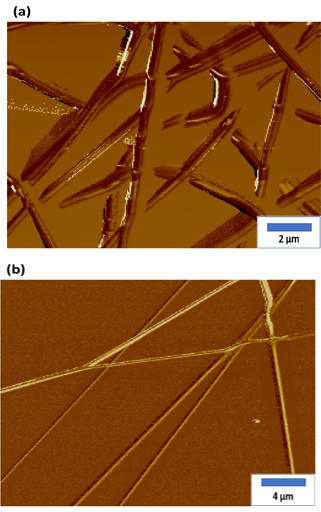 Electrospinning was used to prepare poly(vinyl alcohol) (PVA)/zinc nitrate hexahydrate [Zn(NO₃)₂·6H₂O] fibers to evaluate the influence of zinc nitrate concentration on their morphology. The ZN2, ZN4, and ZN6 formulations had initial Zn(NO₃)₂·6H₂O concentrations of 2%, 4%, and 6% w/v relative to the water volume and approximate final concentrations of 1.01%, 2.04%, and 3.09% w/v relative to the total precursor-mixture volume, respectively. The mixtures were electrospun for 2 h onto silicon substrates, and the resulting specimens were thermally treated at 500 °C for 6 h using a heating rate of 10 °C min⁻¹. Optical and scanning electron microscopy showed that ZN4 produced greater observed substrate coverage and a more interconnected fibrous network under the investigated conditions. In contrast, ZN2 generated heterogeneous deposits containing clusters, short needle-like structures, bundles, and agglomerates, whereas ZN6 produced sparse deposits containing bundles and curved or segmented features. Non-contact atomic force microscopy of ZN4 showed apparent fiber widths of approximately 1.5–2.0 µm before thermal treatment and 120–380 nm after treatment. Separately, non-electrospun powder products obtained by thermally treating ZN6 precursor-solution aliquots exhibited Raman bands near 100, 332, and 438 cm⁻¹ from 500 °C onward, consistent with the characteristic vibrational modes of wurtzite ZnO. Qualitative EDS measurements provided complementary evidence of zinc-containing material. The results demonstrate that precursor concentration substantially influences the coverage, interconnectivity, and heterogeneity of the deposited fibrous structures.